Description
TTS6610A | 5.5′ × 10′ Aluminum Tilt Trailer – 2,365 lb Payload
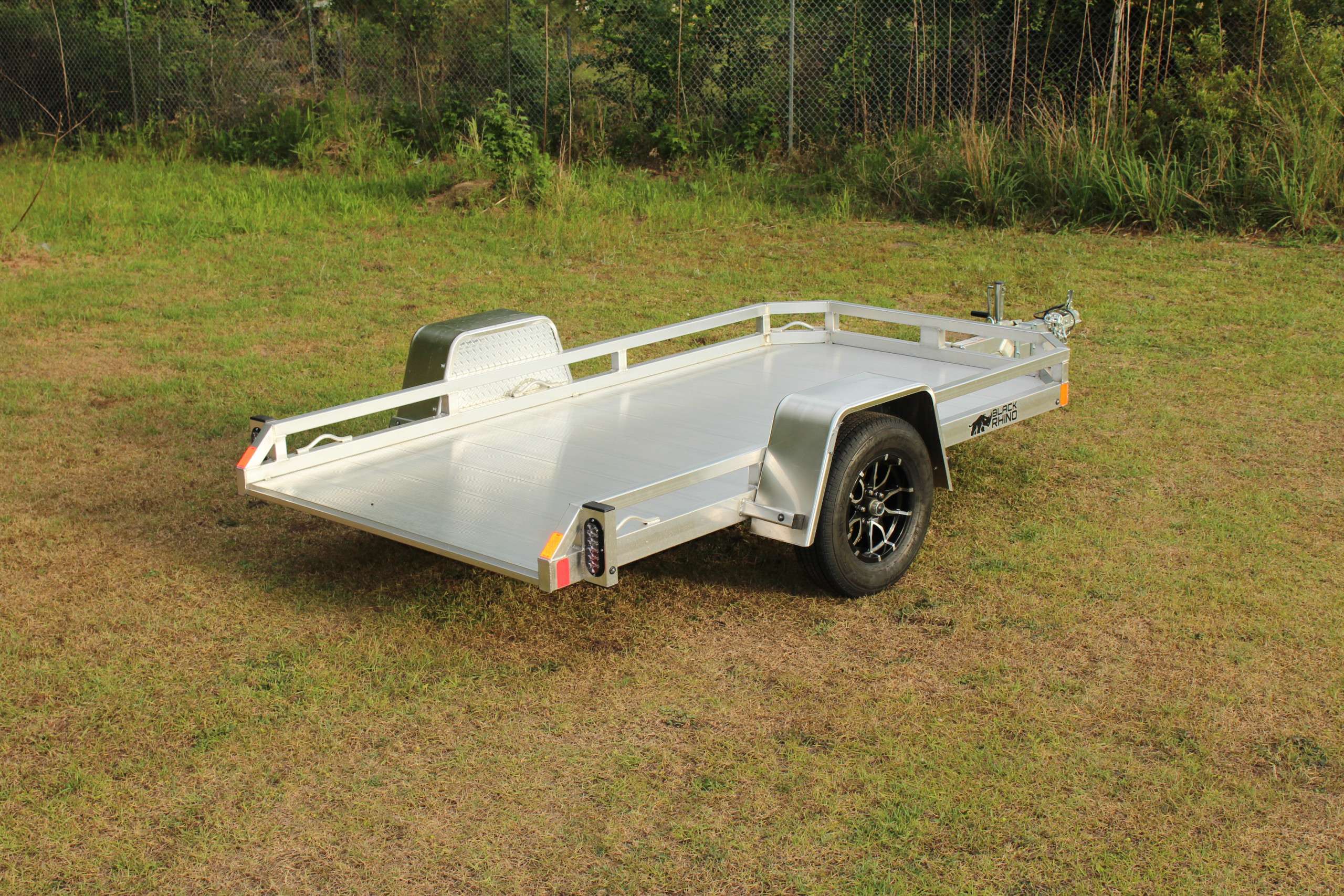
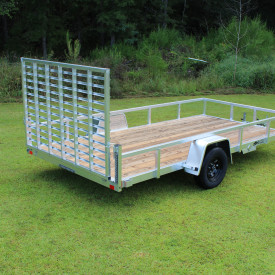
The Black Rhino TTS6610A is a compact 5.5′ × 10′ aluminum tilt trailer designed around something that matters every time the trailer is used: making rolling equipment easier to load, secure and unload.
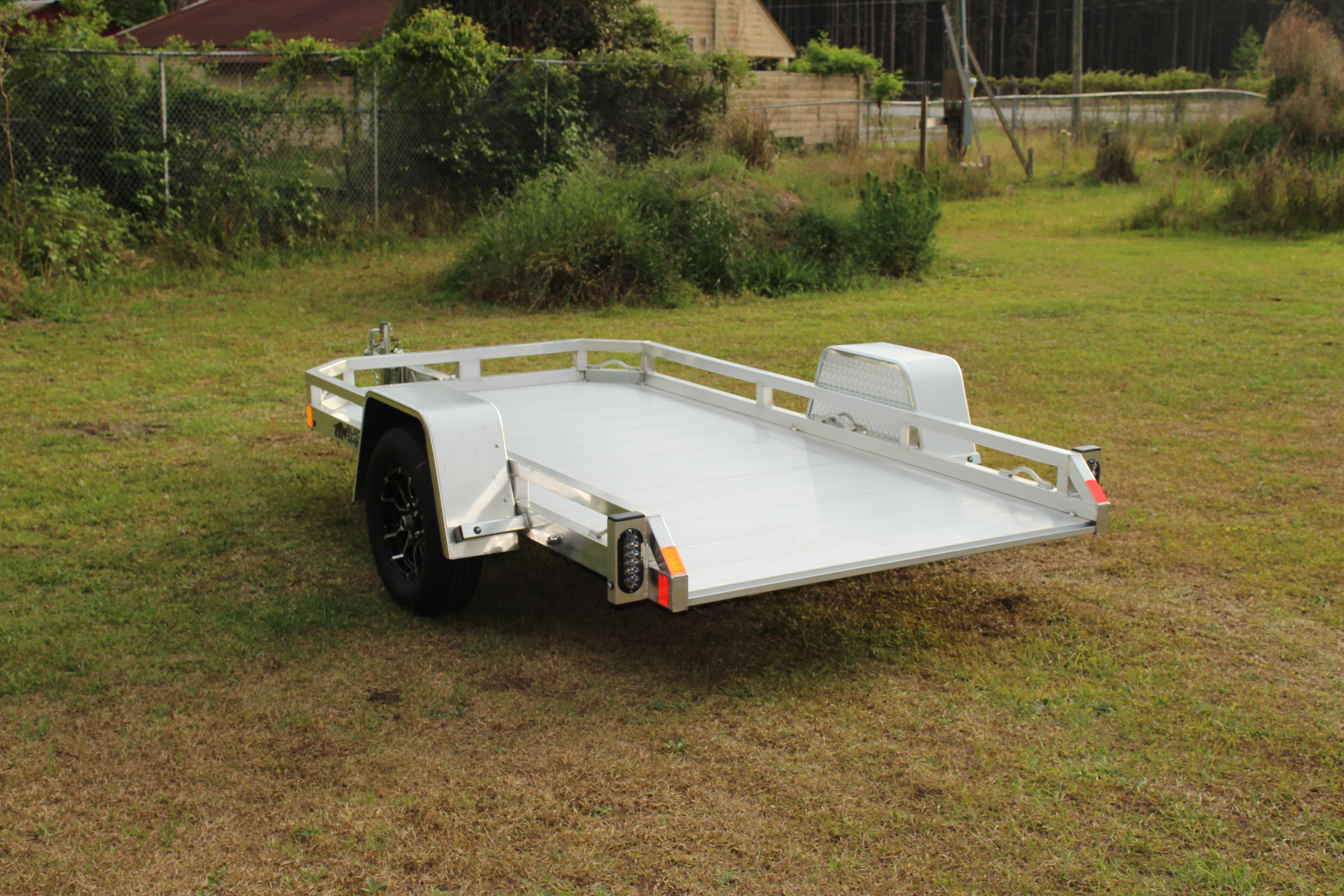
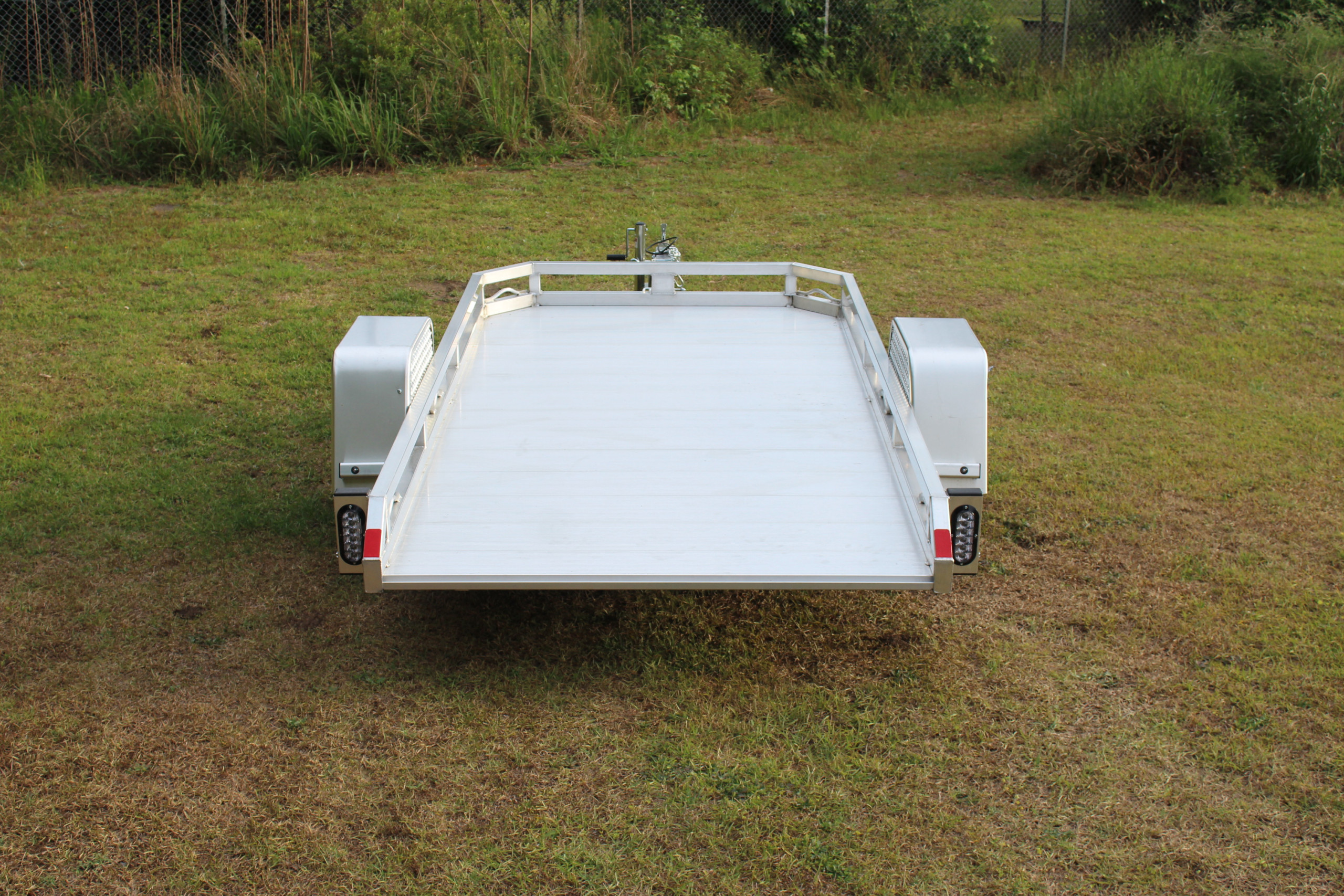
Its 62-inch-wide by 10-foot-long aluminum deck tilts to create the loading surface, eliminating the need for a conventional rear ramp gate. With a 16-inch deck height, 2,990-lb GVWR and published 2,365-lb payload capacity, the TS6610A combines a low loading height, manageable overall size and useful carrying capacity.
But the specifications tell only part of the story.
After examining and operating the TTS6610A, several construction details stand out—from the balance of the tilt deck and placement of its pivot to the protected tie-down points and carefully designed rear loading edge. These details help explain how Black Rhino designed the trailer around the way equipment is actually loaded, secured and transported.
BUILT AROUND THE WAY YOU LOAD
A tilt trailer should make loading simpler. The TS6610A eliminates the need to deploy, remove or store conventional loading ramps. Release the tilt mechanism and the aluminum deck itself becomes the loading surface.
Black Rhino combines the tilting deck with a low 16-inch deck height, open rear approach and low-profile perimeter rail. This provides easy access for compatible rolling cargo while still giving the deck a defined perimeter.
For motorcycles, golf carts, ATVs, lawn equipment and compact machinery that fit within the trailer’s dimensions and rated capacity, it is a straightforward and practical loading arrangement.
BALANCED FOR ONE-PERSON TILT OPERATION
One of the TTS6610A’s most interesting characteristics does not appear on a typical specification sheet: the balance of the trailer when operating the tilt deck.
With the trailer disconnected from the tow vehicle, positioned on a suitable level surface, the wheels securely chocked and the tilt mechanism unlocked, an operator can apply weight toward the rear of the deck and initiate the tilt without needing the coupler attached to a tow vehicle simply to hold the front of the trailer down.
That distinction can be important. Some tilt trailers depend on the tow vehicle—or another person stabilizing the tongue—to provide resistance while weight is applied toward the rear of the deck.
The balance observed on the TTS6610A allows one-person tilt operation while the trailer is independently parked and properly secured. For an owner who frequently loads or unloads equipment alone, that is a small design detail with a very practical benefit.
THREE-MEMBER TONGUE & FRONT STRUCTURE
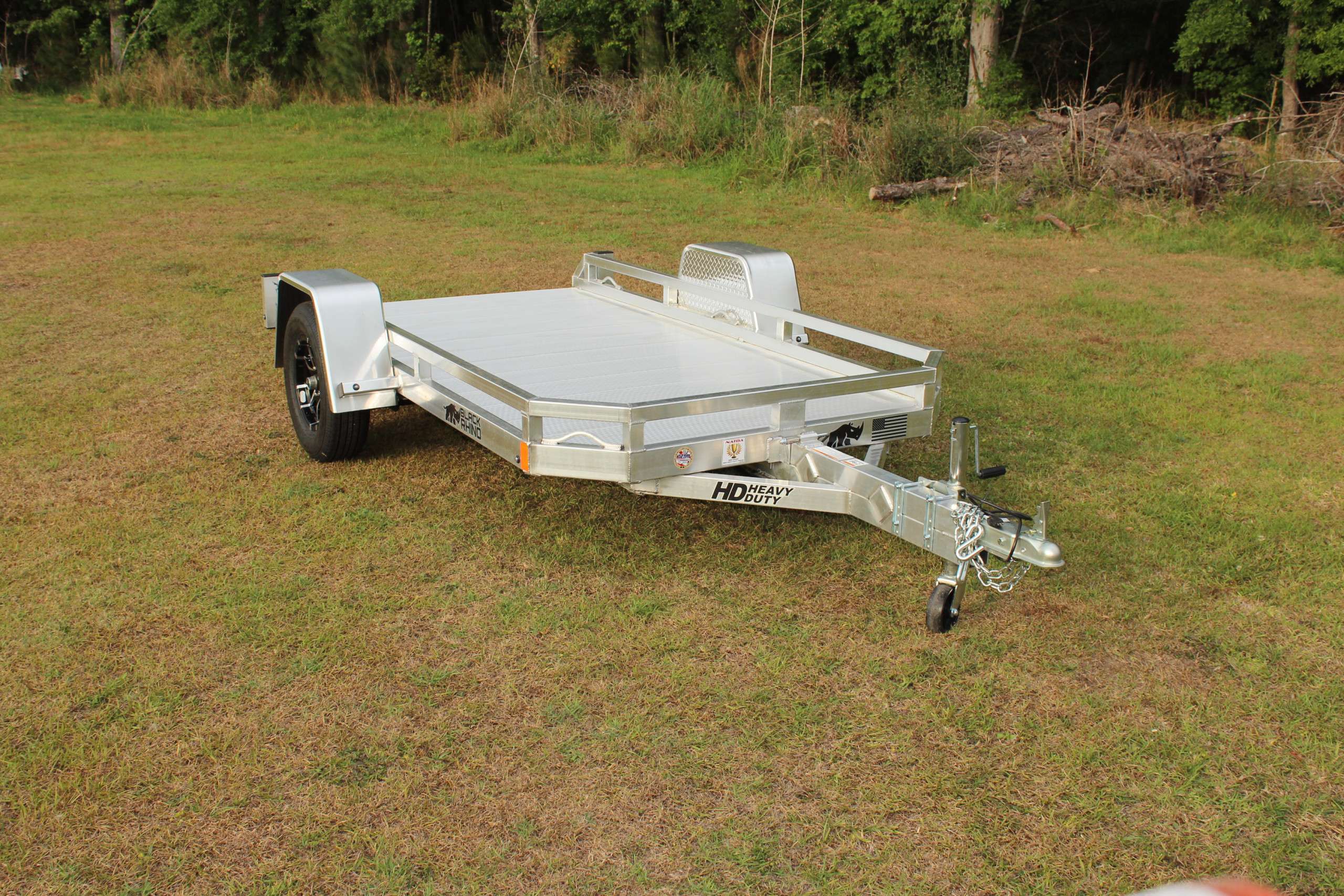
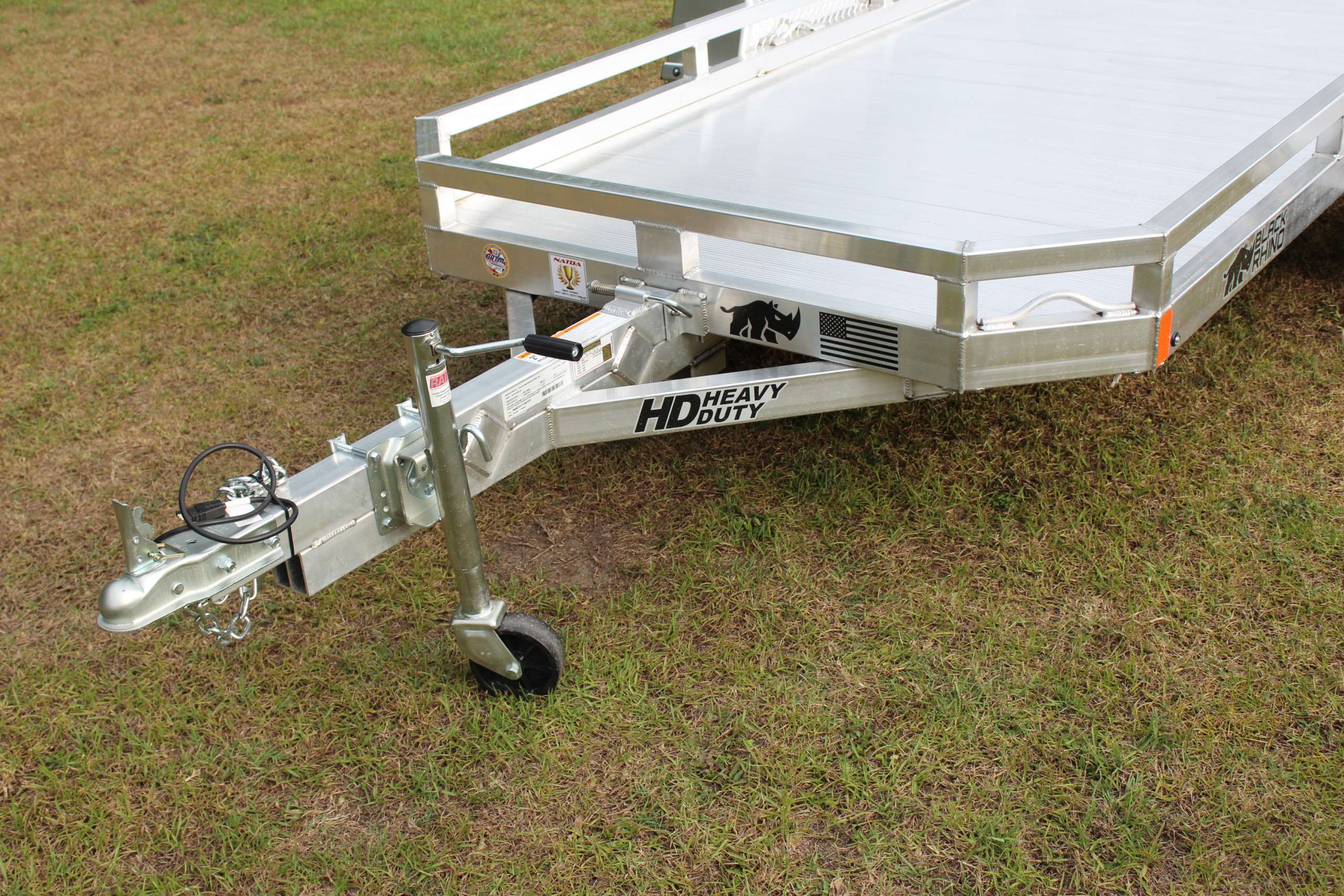
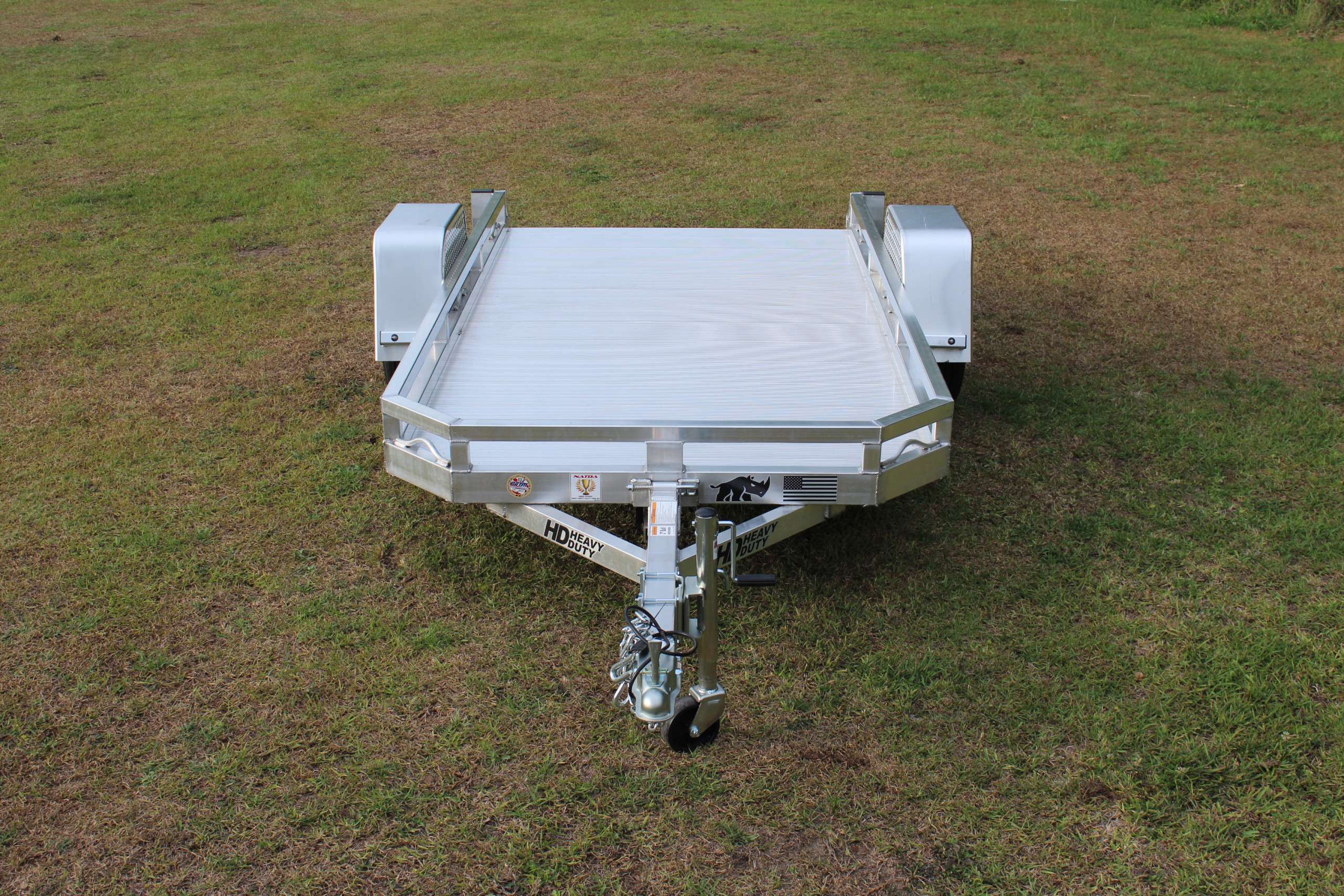
The front of the TTS6610A uses a substantial three-member aluminum tongue and front support arrangement. Two outer tongue members converge toward the coupler while the center structure interfaces with the tilting deck and front chassis.
This three-member arrangement does more than support the coupler. By triangulating the front structure and distributing towing and twisting forces across multiple structural members, the design helps resist torsional movement and unwanted flex through the tongue and forward portion of the trailer.
Controlling chassis flex is particularly important in an aluminum trailer. Every trailer experiences changing forces as it travels over uneven pavement, enters driveways, corners, carries an offset load or encounters normal road movement. A well-supported and triangulated front structure helps distribute those forces rather than concentrating them at a smaller number of structural connections.
That structural rigidity can contribute to more stable behavior when the trailer is being towed both empty and loaded, while reducing unnecessary movement through welded joints and surrounding frame members. Limiting repeated flex at structural connections is also desirable for the long-term durability of an aluminum welded structure.
Black Rhino also incorporates a spring-loaded tilt-deck locking mechanism into the front structure. The mechanism secures the tilting deck in its transport position while remaining readily accessible when preparing the trailer for loading or unloading.
The construction is worth examining closely: substantial aluminum members, triangulation, reinforcement and welded connections are clearly visible throughout the front structure. It is another example of Black Rhino using the trailer’s structure as an integrated system rather than treating the tongue, chassis and tilt deck as unrelated components.
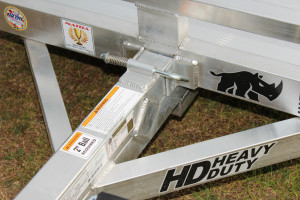 The TTS6610A uses a three-member aluminum tongue and triangulated front structure with a spring-loaded tilt-deck locking mechanism.
AXLE-AREA TILT PIVOT & DAMPENED DECK MOVEMENT
Underneath the TTS6610A, the construction of the tilt system becomes easier to understand.
The tilt pivot is positioned in the axle and main-frame region, where the upper tilting deck, longitudinal frame members, crossmembers and lower chassis structure come together.
This places the deck’s movement point within a substantial structural area of the trailer rather than treating the tilt mechanism as an isolated attachment.
Black Rhino also incorporates a dampening cylinder into the tilt system. The cylinder helps control deck movement during the loading and unloading process rather than allowing the tilting deck to move completely uncontrolled.
The photographs below provide a particularly good view of how the system is constructed. With the deck raised, you can see the relationship between the tilting upper deck, structural deck members, stationary lower chassis and dampening system.
Combined with the trailer’s balanced deck geometry and low deck height, the arrangement creates a tilt system that is integrated into the trailer’s overall chassis design.
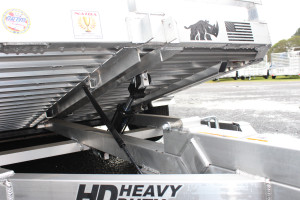 With the TTS6610A deck raised, the relationship between the tilting deck, aluminum chassis structure and dampening cylinder can be clearly seen.
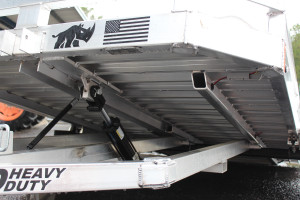 Detailed underside view of the TTS6610A showing the dampening cylinder, aluminum deck supports, crossmembers and lower frame structure.
LOW-PROFILE 2″ × 2″ PERIMETER RAIL
The TTS6610A uses 2″ × 2″ aluminum tube framing around the perimeter of the deck.
Unlike the tall sides of a conventional utility trailer, this is a deliberately low-profile design. The bottom of the perimeter rail sits approximately 3.5 inches above the deck, while the top is approximately 5.5 inches above the deck surface.
The rail provides a useful physical boundary around the deck without creating tall sides that interfere with loading and cargo access. It can help reduce the opportunity for an object to simply roll across an otherwise open deck edge, but it does not replace proper cargo securement.
SIX WELDED ALUMINUM TIE-DOWN POINTS
For primary cargo securement, Black Rhino provides six dedicated welded aluminum tie-down hoops.
Rather than positioning these fittings on top of the deck where tires, equipment or cargo could contact them, the tie-down points are located below the low-profile perimeter rails and outside the primary loading surface.
This keeps the securement points accessible for straps while preserving a clean and unobstructed deck.
The 2″ × 2″ perimeter tubing may provide additional locations for appropriate securement when needed, but the six welded hoops are the trailer’s dedicated cargo tie-down points. Always select straps and attachment locations appropriate for the load being transported.
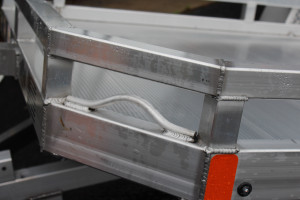 One of six welded aluminum tie-down hoops on the Black Rhino TTS6610A, positioned below the low-profile perimeter rail and outside the primary loading surface.
LOADING-FRIENDLY REAR RAIL DESIGN
Black Rhino also treats the perimeter rail differently at the rear loading edge of the TS6610A.
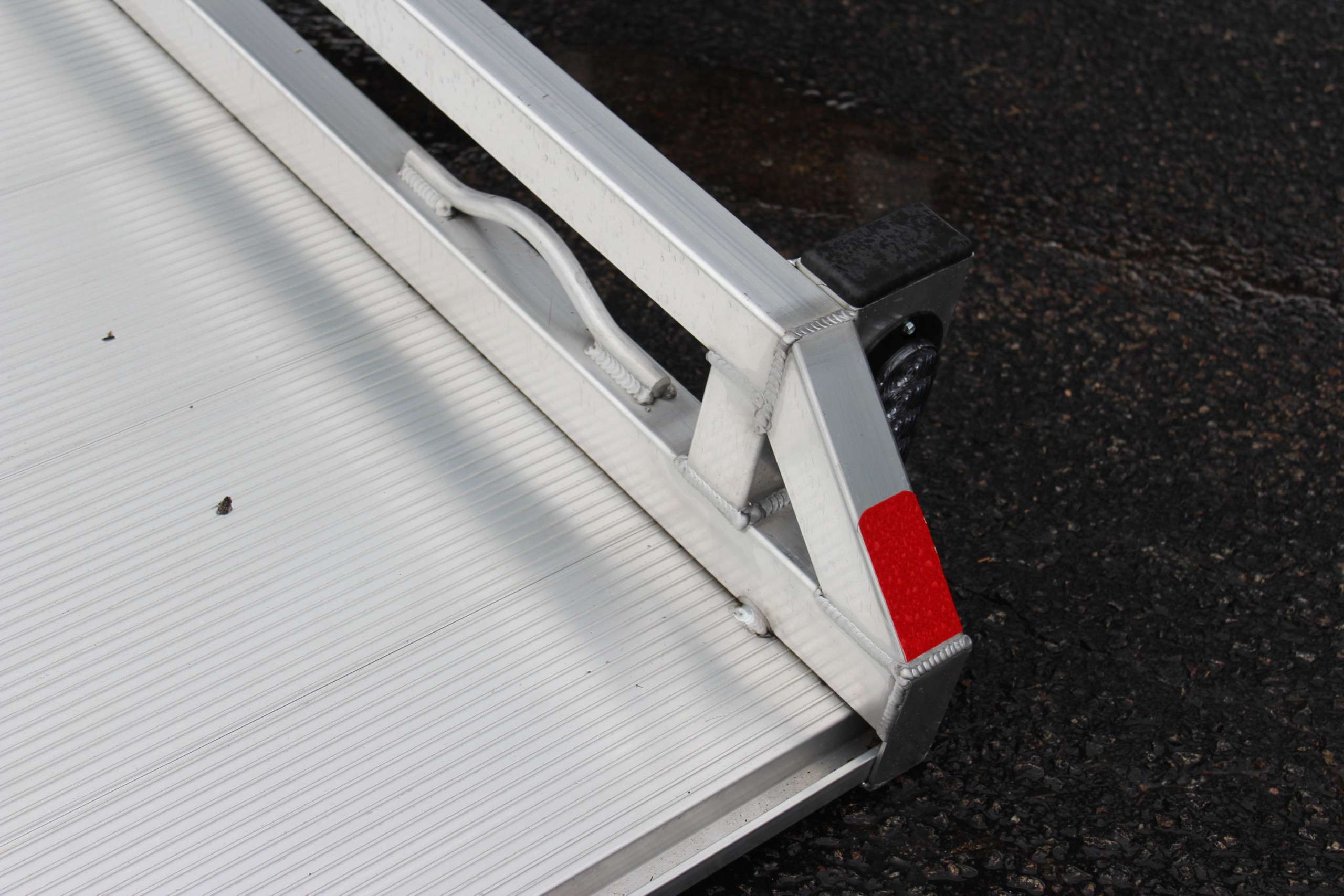
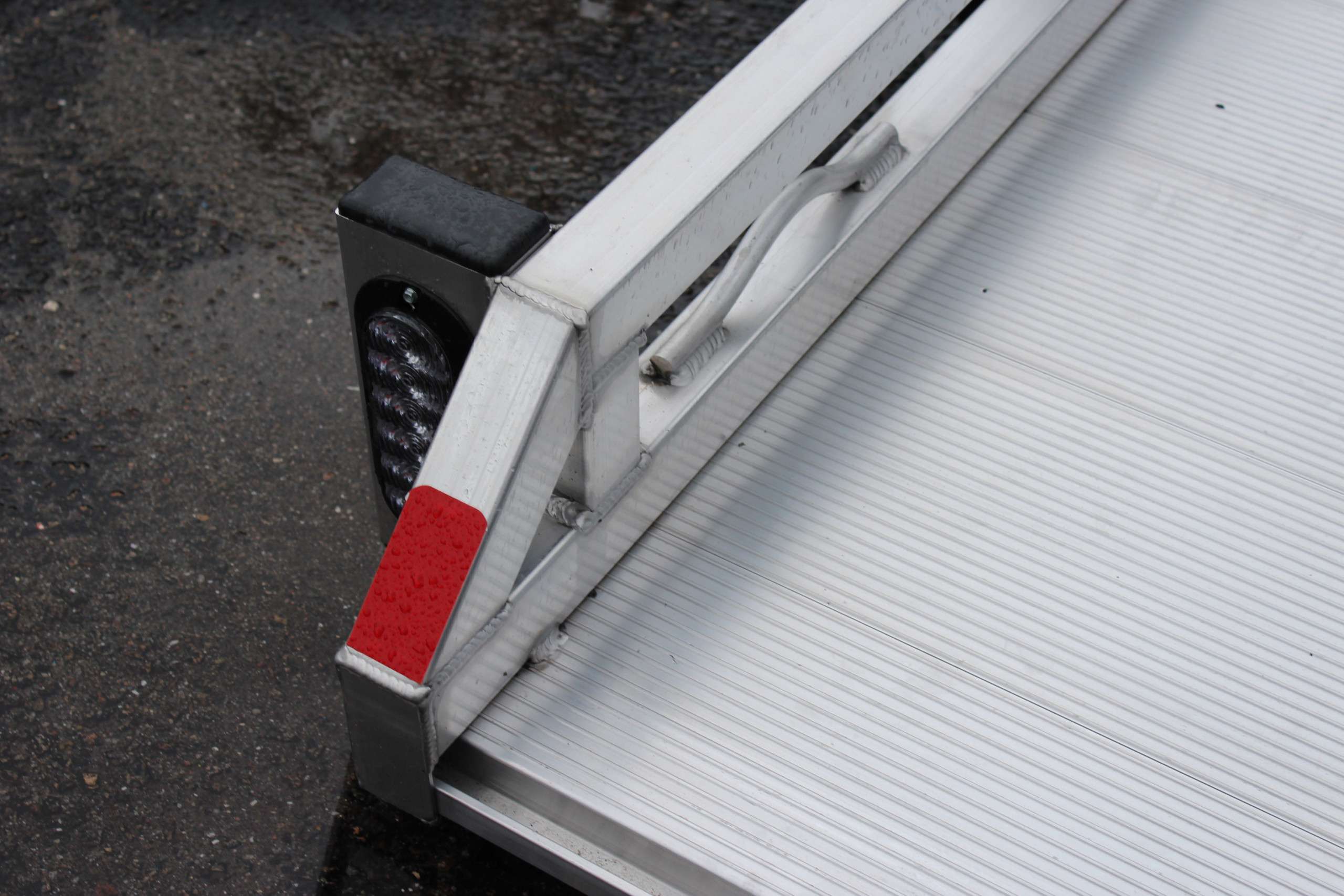
Rather than terminating the 2″ × 2″ tubing in a square, projecting corner, the rear portion of the rail angles downward into the rear upright structure.
This creates a smoother transition at an area where tires and equipment routinely pass during loading and unloading. The angled design reduces the prominence of an exposed square rail end that could otherwise become a contact or snag point for tires or cargo.
The rear rail also terminates into a substantial upright rather than extending unsupported into a high-contact loading area.
That same rear upright provides a protected mounting location for the trailer’s LED rear lighting, integrating the perimeter rail, rear structure and lighting into a compact corner assembly.
It is another small detail that illustrates the TTS6610A’s overall design philosophy: the trailer appears to have been engineered around how equipment is actually loaded, secured and transported—not simply around deck dimensions and payload capacity.
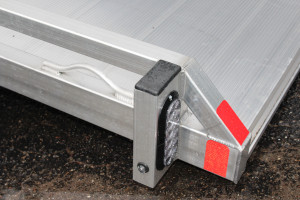 The TTS6610A perimeter rail angles downward into the rear upright, creating a smoother loading-edge transition while providing a protected mounting location for the LED rear light.
ALUMINUM DECK & TRAILER CONSTRUCTION
The TTS6610A combines aluminum deck and frame construction with a published dry trailer weight of approximately 650 lbs.
The deck measures 62 inches wide × 10 feet long, while the trailer measures approximately 86 inches wide × 14 feet overall. Deck height is approximately 16 inches.
At a published dry weight of 650 lbs, the TTS6610A provides a published 2,365-lb payload capacity within its 2,990-lb GVWR.
TORSION AXLE, ALUMINUM WHEELS & RADIAL TIRES
The TTS6610A uses a single torsion idler axle with a 3,500-lb GAWR. The trailer itself carries a published 2,990-lb GVWR.
- Axle: Single torsion idler
- GAWR: 3,500 lbs
- GVWR: 2,990 lbs
- Tires: ST205/75R14 radial
- Wheels: 14″ × 5.5″ aluminum
- Wheel Configuration: 5-lug
- Cold Tire Pressure: 65 PSI
The TTS6610A configuration documented here uses an idler axle and does not have trailer brakes.
2″ HITCH BALL
The TTS6610A is designed for use with a 2-inch hitch ball, as specified on the trailer’s manufacturer labeling.
The tow vehicle, receiver, hitch components and hitch ball must always be appropriately rated for the trailer and its actual loaded weight.
TTS6610A CORE SPECIFICATIONS
| Specification | TTS6610A |
|---|---|
| Trailer Type | Aluminum Tilt Trailer |
| Deck Size | 62″ × 10′ |
| Approximate Market Size | 5.5′ × 10′ |
| Overall Size | 86″ × 14′ |
| Deck Height | 16″ |
| Rear Gate | None – Tilt Deck |
| Axle Type | Single Torsion Idler |
| GAWR | 3,500 lbs |
| GVWR | 2,990 lbs |
| Dry Weight | 650 lbs |
| Published Payload | 2,365 lbs |
| Tires | ST205/75R14 Radial |
| Wheels | 14″ × 5.5″ Aluminum |
| Wheel Configuration | 5-Lug |
| Cold Tire Pressure | 65 PSI |
| Hitch Ball | 2″ |
| Perimeter Rail | 2″ × 2″ Aluminum Tube |
| Rail Height | Approx. 5.5″ to top from deck |
| Dedicated Tie-Down Points | 6 Welded Aluminum Hoops |
GVWR VS. PAYLOAD: AN IMPORTANT DISTINCTION
The TTS6610A uses an axle with a published 3,500-lb GAWR, but that does not mean the complete trailer should be loaded to 3,500 lbs.
The trailer’s published GVWR is 2,990 lbs.
With a published dry trailer weight of approximately 650 lbs:
2,990-lb GVWR − 650-lb dry weight = 2,365-lb published payload capacity.
The weight of cargo, accessories and other equipment added to the trailer must be considered when determining actual available payload. Always remain within the applicable trailer, axle, tire, hitch and tow-vehicle ratings.
WHO IS THE TTS6610A BUILT FOR?
The TS6610A’s compact dimensions, aluminum construction and tilt-deck loading system make it a versatile choice for owners transporting recreational and working equipment such as:
- Motorcycles
- Golf carts
- ATVs and recreational equipment
- Lawn and landscape equipment
- Zero-turn and riding mowers
- Compact machinery and equipment
- Other rolling cargo within the trailer’s dimensional and weight limits
Equipment varies substantially in track width, wheelbase, ground clearance and operating weight. Always verify the actual dimensions and loaded weight of the equipment before selecting a trailer.
A GREAT COMPANION FOR MOTORHOME TRAVEL
At a published dry weight of approximately 650 lbs, the TTS6610A can also be an attractive trailer for motorhome owners who want to bring a motorcycle, golf cart or other appropriately sized recreational vehicle along for a weekend trip or extended RV adventure.
Its 10-foot deck, compact overall footprint and aluminum construction help keep the trailer manageable, while the tilt deck eliminates the need to carry and store separate loading ramps.
For RV travelers, that creates a particularly useful combination: bring the motorhome for the journey and a motorcycle, golf cart or other appropriately sized vehicle for exploring once you arrive.
Motorcycles and golf carts vary considerably in weight, wheelbase, width and ground clearance. Always verify the equipment’s dimensions and loaded weight, along with the motorhome manufacturer’s hitch, towing, GVWR and GCWR limitations before towing.
WHAT MAKES THE TS6610A DIFFERENT?
No single feature tells the entire story.
It is the combination of the balanced tilt deck, 16-inch deck height, three-member front structure, axle-area pivot, dampened tilt movement, low-profile perimeter rail, six protected welded tie-down points and carefully finished rear loading edge that makes the TTS6610A particularly interesting.
The published specifications tell you how much trailer you are buying.
The construction details help explain how Black Rhino expects you to use it.
For an owner who frequently loads equipment alone, the ability to operate the tilt deck while the trailer is independently parked and properly wheel-chocked may be one of its most useful characteristics.
BLACK RHINO 3-YEAR LIMITED WARRANTY
Black Rhino trailers are backed by the manufacturer’s 3-Year Limited Warranty. Warranty coverage is subject to Black Rhino Manufacturing’s current terms, conditions, exclusions and registration requirements.
PRICING & AVAILABILITY
Black Rhino trailer pricing and availability can vary by model, configuration and current inventory.
411Marine / Black Rhino Trailers 411 can assist with current availability, trailer selection and determining which Black Rhino Tilt Series model best matches the equipment you intend to transport.
If the TTS6610A is too narrow or short for your application, larger Black Rhino Tilt Series models provide additional deck width and length, including 12-foot and 14-foot configurations.
Contact us for current pricing, availability and model assistance.
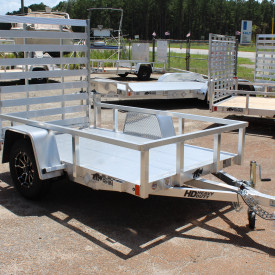
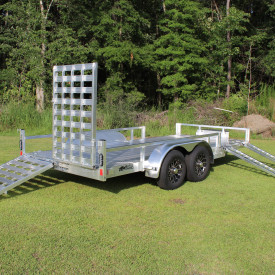
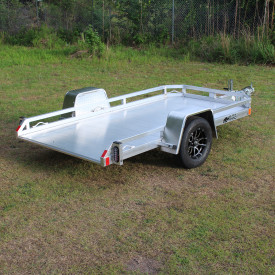
Like to Learn more about Black Rhino Trailers? Follow me an view other aluminum trailer model choices
Reviews
There are no reviews yet.